 Skip to content
A good towing call starts with a clear description, not a diagnosis. You do not need to know why the car stopped working. You do need to explain where it is, what it can still do, and where you want it taken. Those details help a dispatcher assess the request before equipment is assigned.
Start with the location
Give the street address and municipality, then describe the actual entrance. A shopping center may have several driveways, and a building's mailing address may lead to the wrong side. On a highway, provide the road, direction of travel, and the nearest exit or mile marker you can identify safely. Do not walk into traffic to find a sign.
Describe what you can observe
Share the year, make, and model. Explain whether the engine starts, whether the wheels appear damaged, and whether the vehicle is in a garage, on a slope, or behind a locked gate. Mention a missing key or a vehicle that will not shift out of Park. “The front wheel is turned sideways” is more useful than guessing which suspension part failed.
Decide what still needs confirming
Have a destination ready if possible, including the repair shop's name and address. If you have not chosen one, say so before a tow is arranged. Tell dispatch how many people are with you and whether someone needs a separate ride. Passenger space should never be assumed.
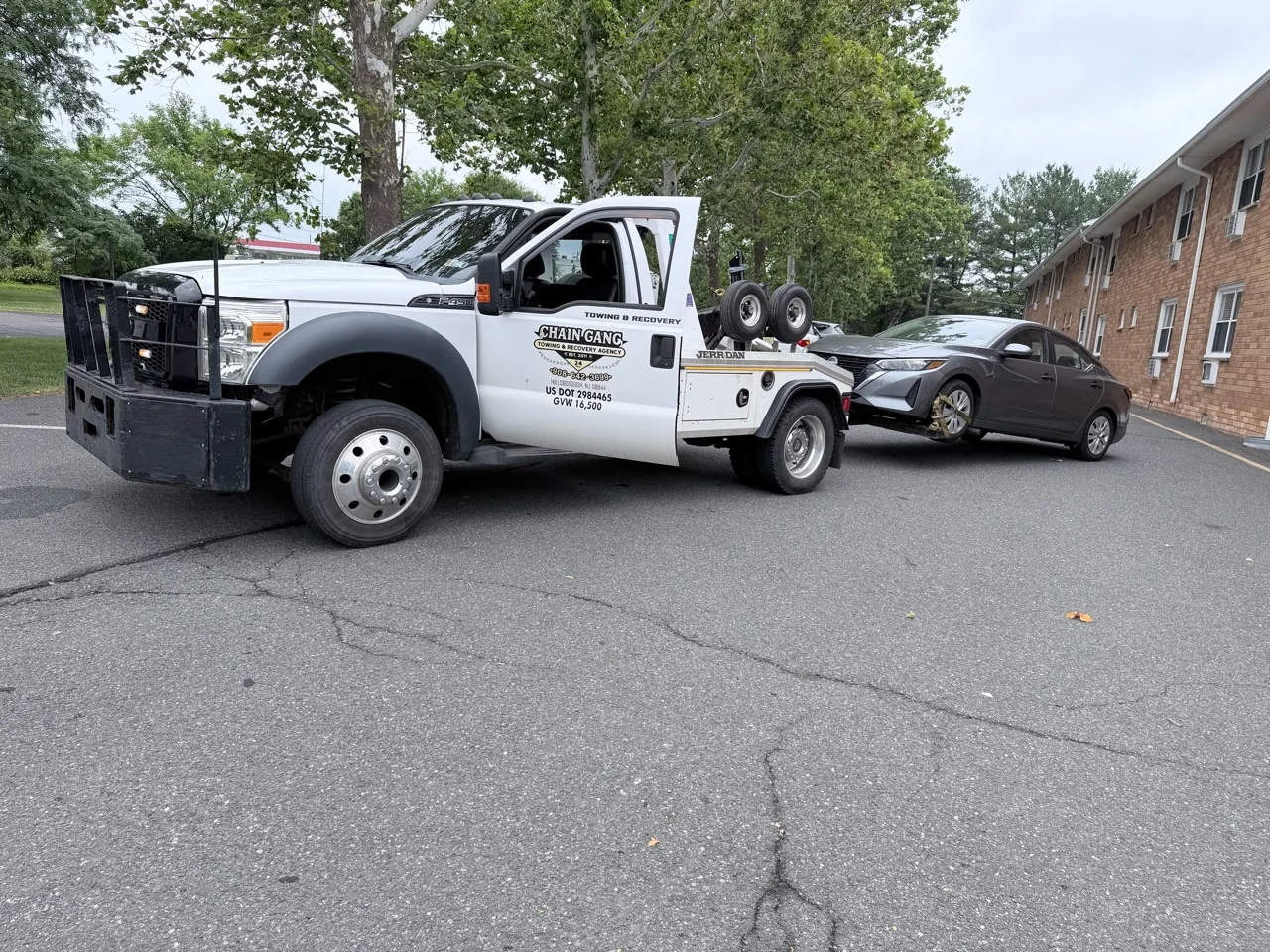
Before ending the call, confirm the callback number, access instructions, destination, and what the quote covers. If conditions change, update dispatch rather than starting a second, conflicting request. For a Chain Gang towing request in Central New Jersey, begin with those facts; the equipment and service decision comes after review.