 Skip to content
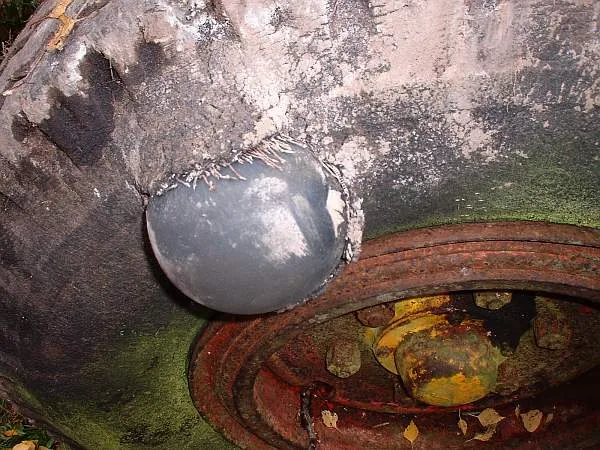
Photo: Christidy at English Wikipedia · Source · Public domain
Visible damage on the side of a tire should not be dismissed because the tread still looks good. A bulge, cut, or other unusual change needs assessment. Do not use a photograph or a quick visual check as permission to continue driving on a tire you believe may be unsafe.
Describe the damage without testing it on the road
If the vehicle is safely parked, note which tire is affected and what you can see. Mention an impact with a curb or pothole, a sudden loss of pressure, or an unusual vibration that occurred before stopping. Do not take another drive simply to see whether the symptom returns.
NHTSA's tire guidance recommends examining tires for signs of damage and discussing concerns with a tire service professional. This is separate from checking tread depth alone. NHTSA tire-safety guidance.
Check what help may be possible
Tell dispatch whether a spare is available and whether the wheel itself appears damaged. A tire problem after an impact can involve more than the tire, so describe the wheel position and any visible suspension issue as observations rather than a diagnosis.
Choose a receiving shop
Call a tire or repair facility and explain the concern before selecting it as the destination. Ask whether it can receive the vehicle and assess the relevant tire size and wheel condition. Do not assume every repair option advertised for a tread puncture applies to sidewall damage.
For a request in Watchung, New Jersey, Chain Gang can review the pickup and transport details with you. The important information is the vehicle, location, affected corner, spare availability, and any movement limitation. Keep the focus on getting an appropriate assessment instead of trying to prove the damaged tire can survive one more trip.