 Skip to content

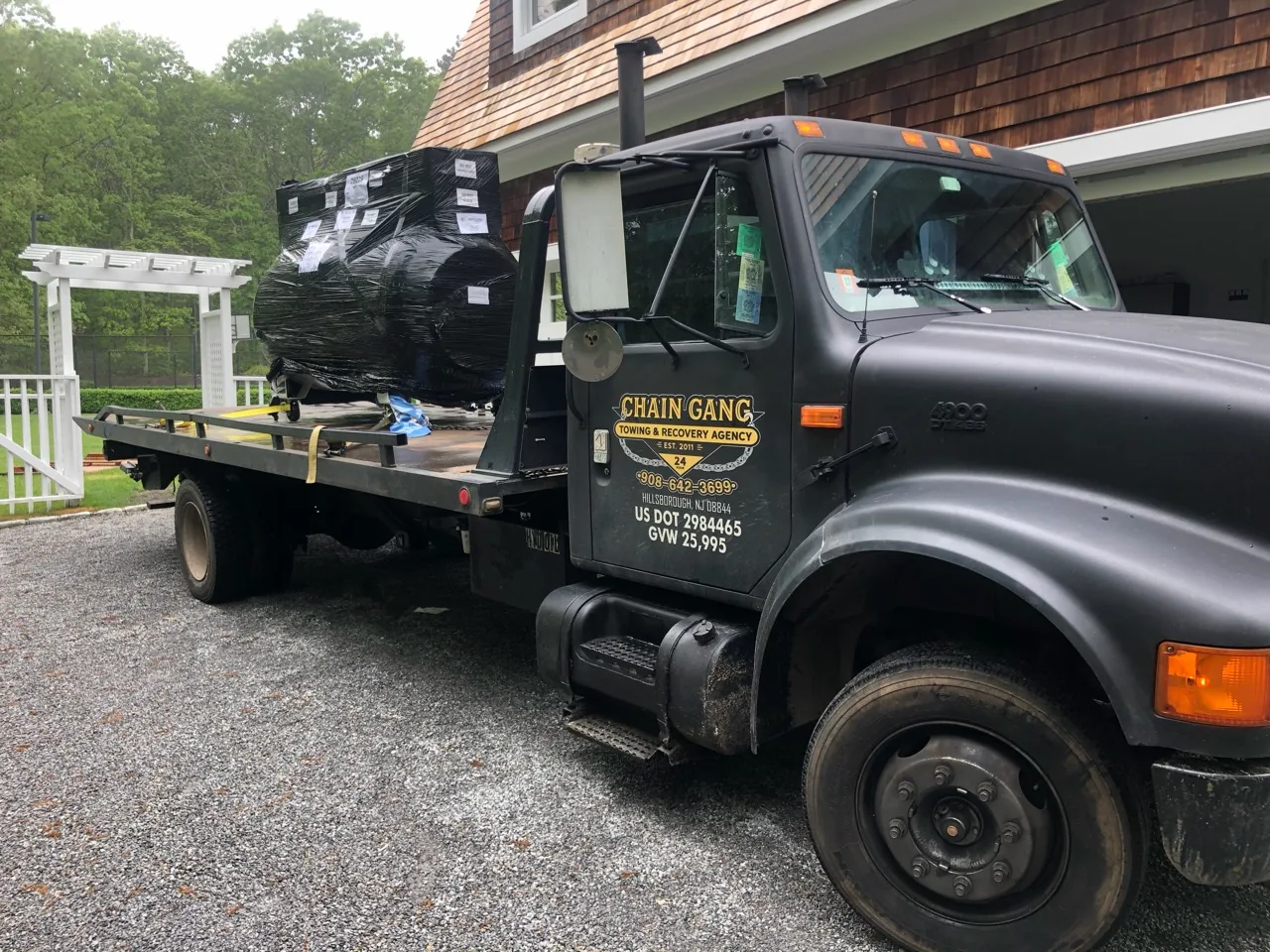
Some transport jobs involve more than a disabled car. In this photograph from Chain Gang’s collection, our first black International tow truck carries a wrapped hyperbaric chamber on a move from Central New Jersey to upstate New York. It is a reminder that moving specialized equipment starts with understanding the load—not simply finding enough space on a truck.
Start with the chamber’s identity and instructions
Before requesting transport, collect the manufacturer, model, documented shipping weight, overall dimensions, and the manufacturer’s relocation instructions. Include the dimensions and weight of any crate, base, or accessories traveling with it. A wrapped machine’s appearance does not establish its handling limits.
Ask the manufacturer or its qualified service representative to identify permitted lifting and restraint points, required orientation, packaging, and any limits on tilt, vibration, or weather exposure. The answer may differ between chamber designs. Do not substitute instructions for another model or use a photograph as a rigging plan.
Arrange professional preparation before pickup
The equipment owner should arrange for the manufacturer or qualified service personnel to prepare the chamber for relocation. They need to confirm its transport-ready condition and handle any required shutdown, depressurization, disconnection, and protection of components according to the applicable instructions. This is equipment relocation, not transport of an occupied or operating chamber.
Disclose any oxygen cylinders, gas supplies, or other regulated materials separately before a move is accepted. Do not assume they can travel under the same arrangement as the chamber or attempt to disconnect unfamiliar pressure equipment yourself.
The FDA emphasizes following manufacturer instructions and maintaining trained staff for hyperbaric oxygen therapy devices, including attention to oxygen-related fire risks. Its safety notice concerns device use; it is not a transport manual for this particular chamber. FDA device-safety notice.
Plan loading, restraint, and access together
The carrier needs verified load information to assess vehicle capacity, load distribution, handling equipment, and securement. Packaging protects a surface; it does not by itself establish that the load is restrained appropriately. FMCSA’s cargo rules address preventing cargo movement and the suitability of securement systems. The requirements applicable to the specific move must be assessed by the responsible carrier. FMCSA cargo-securement guidance.
Check the whole route into and out of each property: entrances, turns, grades, overhead restrictions, unloading space, and any indoor passage to the final room. Confirm who supplies any specialist lifting equipment and who will receive the chamber.
Finish with a documented handoff
Record the equipment’s visible condition and accompanying items before pickup and on delivery. Arrange any manufacturer-required inspection and recommissioning with qualified service personnel before the chamber returns to use. Successful delivery is not certification that a medical device is ready to operate.
For a specialized-equipment inquiry in Central New Jersey, send Chain Gang the specifications, manufacturer’s handling instructions, safe photographs, and both locations. We can review the request and confirm whether the required transport fits the available equipment and service. Each move needs its own plan.