 Skip to content
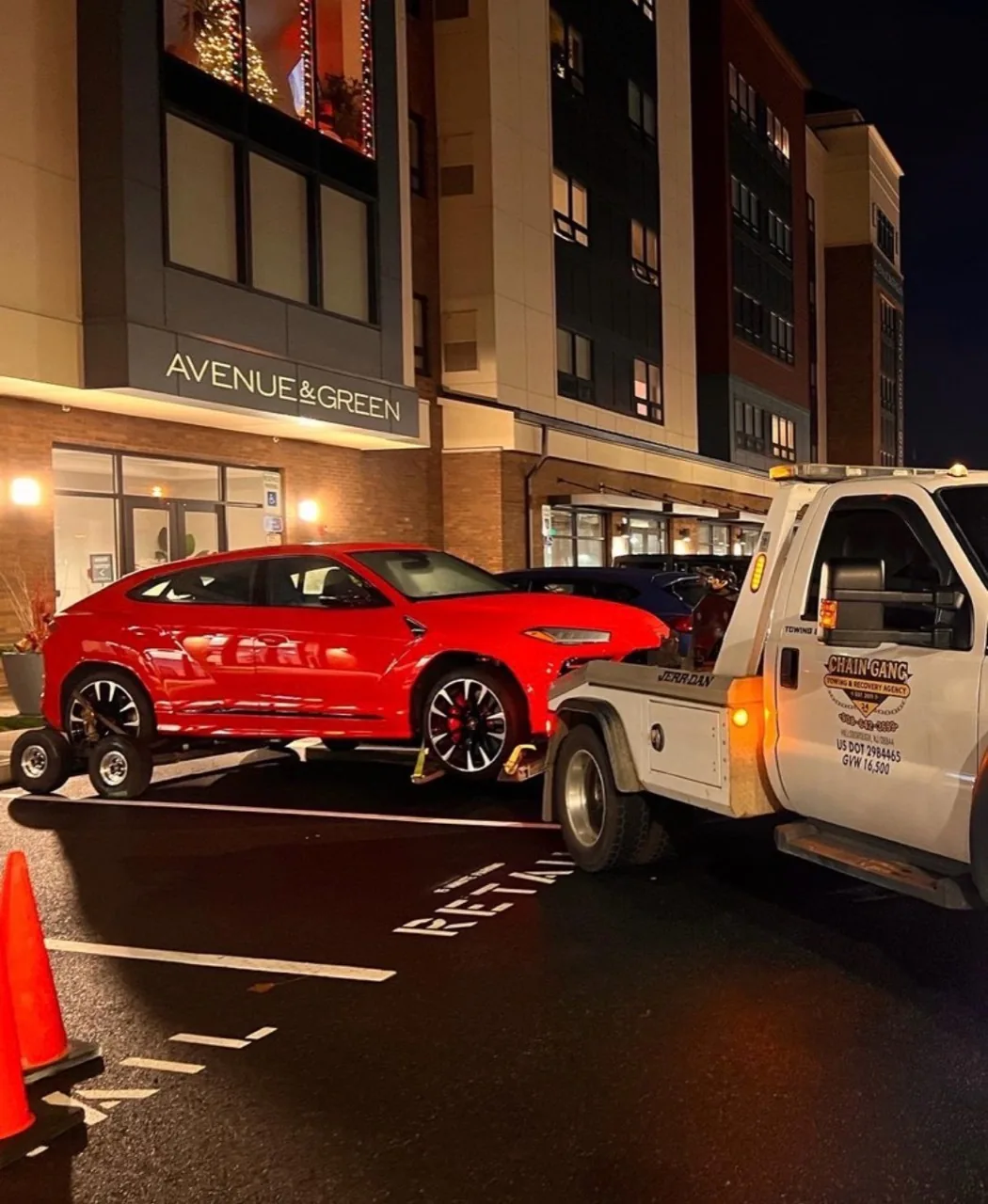
The red Lamborghini pictured here was a Chain Gang towing job in Woodbridge, New Jersey.
Arranging transport for a high-end vehicle should begin with the car's actual requirements. A badge or purchase price does not describe ground clearance, drivetrain, modifications, or operating condition. Those details are what a towing operator needs to evaluate the move.
Identify the model and its condition
Give the year, make, and model, then describe why transport is needed. Is this a planned move, a no-start situation, or a vehicle with damage? Mention low bodywork, aftermarket parts, adjustable suspension, and whether the vehicle can steer and roll. Do not assume that a method used on another sports car is appropriate.
Discuss the loading route
The street-to-driveway transition, garage clearance, and unloading area can matter as much as the truck. Safe photos of the approach and the car's position help the operator understand those constraints. Leave loading decisions and any transport-mode preparation to the operator working from the applicable vehicle instructions.
Document the handoff
Walk through visible existing marks, loose accessories, and items that require attention before loading. Agree on the destination, receiving contact, and key arrangements. If the receiving facility has limited access, confirm its instructions before the vehicle leaves.
For transport inquiries in Woodbridge, New Jersey, ask Chain Gang to assess the specific vehicle and job. Confirm equipment suitability, availability, and the agreed scope rather than relying on a general promise about “luxury towing.”
Before pickup, keep the vehicle’s transport instructions and receiving contact available. Point out any clearance concerns or special handling requirements so they can be considered in the transport plan.