 Skip to content
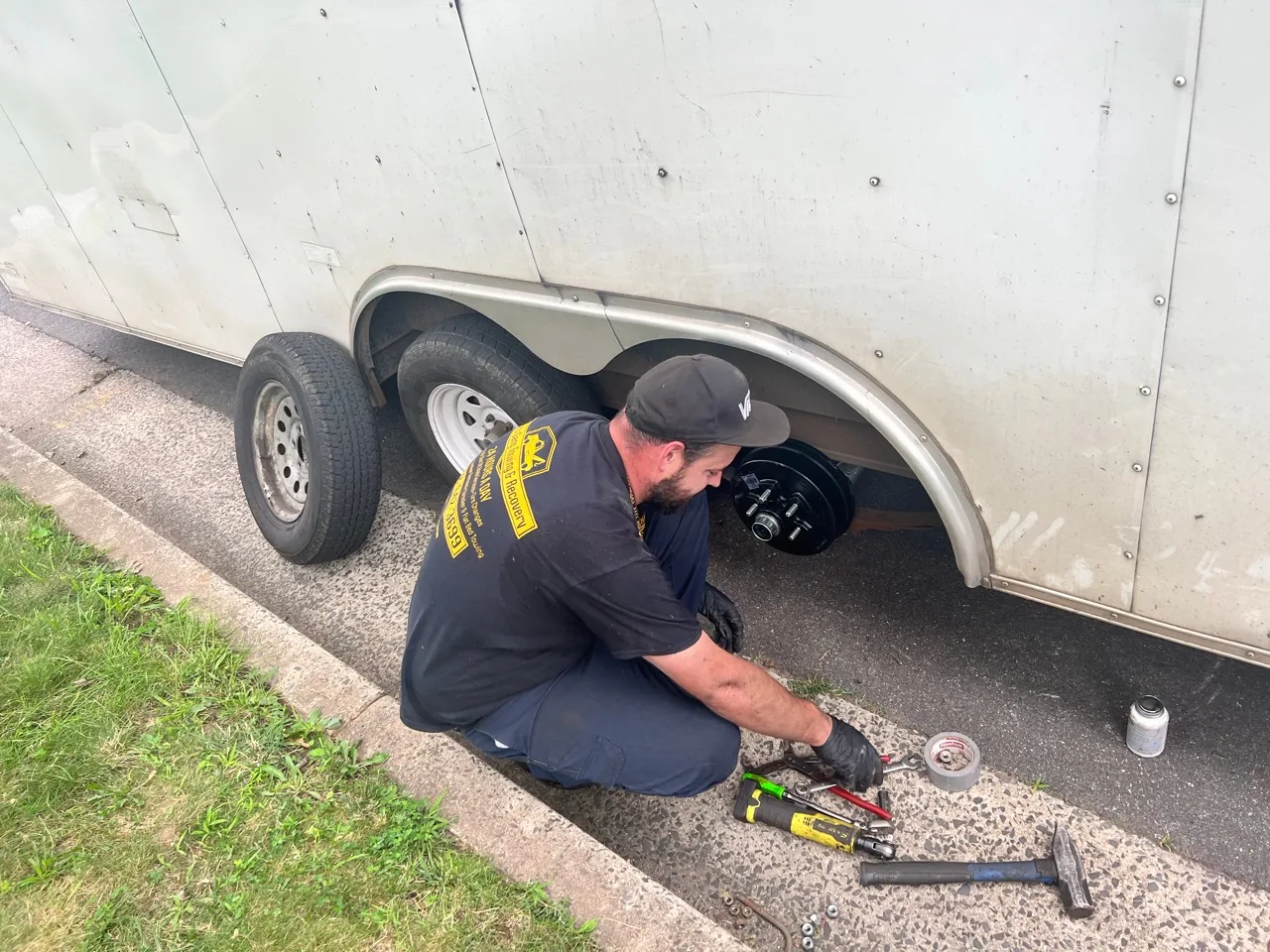
When a tow vehicle breaks down while a trailer is attached, dispatch needs information about both units. Moving the disabled vehicle may not solve what happens to the trailer, its contents, or the people traveling with you.
Describe the whole combination
Give the tow vehicle's details, the trailer type, and the available size and weight information. Explain whether the trailer is loaded and mention special contents or handling concerns. A utility trailer, travel trailer, and another trailer configuration should not be described as if they create the same request.
Avoid improvising a transfer
Do not assume another nearby vehicle can safely take the trailer. Compatibility, ratings, condition, and the proposed route need appropriate assessment. Likewise, do not uncouple a trailer on an unsafe surface or beside traffic simply because it appears to make the disabled vehicle easier to collect.
Confirm the destinations
The vehicle may need a repair shop while the trailer needs a separate secure location. Discuss both destinations and who will receive each unit. If you do not yet have an arrangement for the trailer, say so before the towing plan is accepted.
Account for passengers and belongings
Arrange suitable passenger transportation independently if needed. Keep essential items accessible only when it is safe to retrieve them. Explain if the trailer contains anything that cannot be left unattended under the proposed plan.
For a request in Whitehouse Station, New Jersey, Chain Gang should review the complete situation before confirming what it can handle. A clear description of both vehicle and trailer prevents a single-vehicle towing request from leaving half the problem unresolved.