 Skip to content

An off-road outing can end with a vehicle that will not start, a damaged wheel, or a trailer problem that prevents the trip home. When that happens, the transport request should describe the entire situation—not simply ask for a truck to collect an ATV.
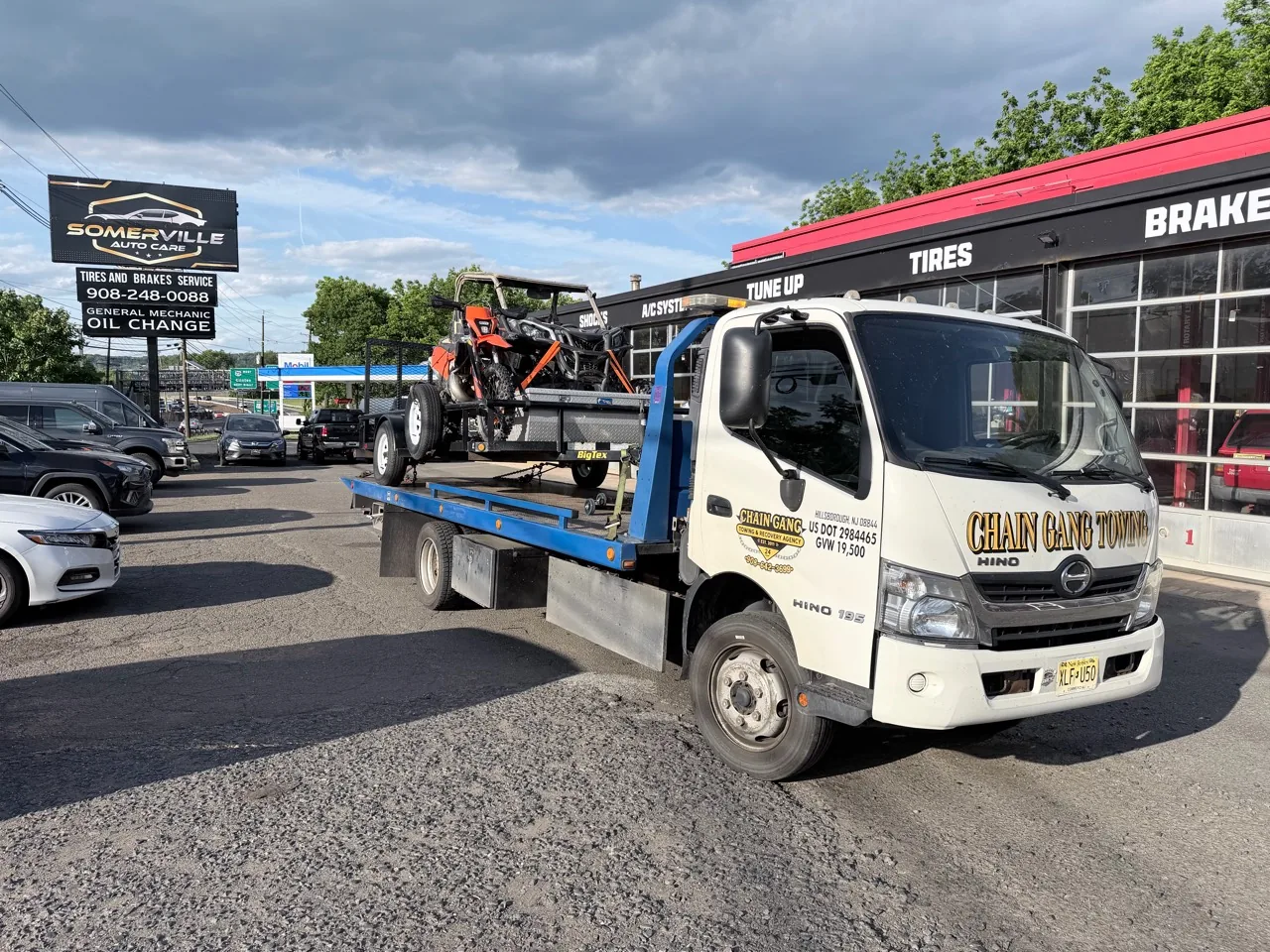
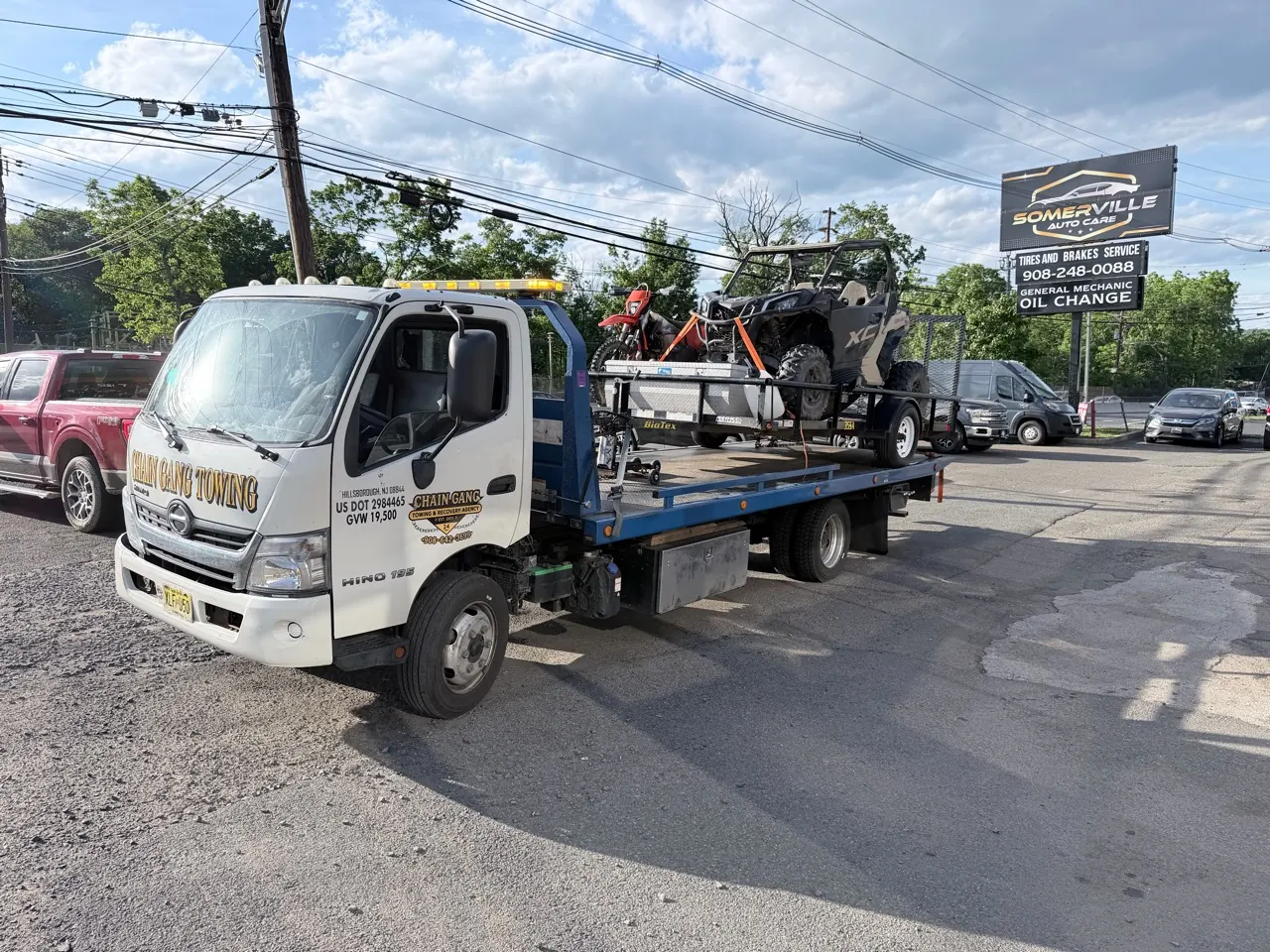
Our company photo shows a side-by-side off-road vehicle and its trailer on Chain Gang’s white Hino 195. An ATV, a side-by-side UTV, and a trailer each bring different dimensions and handling needs. The right plan starts with identifying exactly what needs to move.
Tell dispatch which part has broken down
Explain whether the off-road vehicle is disabled, the trailer has a problem, or the vehicle pulling the trailer cannot continue. More than one unit may need transport. Give the manufacturer and model of the ATV or UTV, its documented weight and dimensions if available, and details of any trailer involved.
Mention accessories that change the size or load, such as a roof, cargo box, or installed equipment. Say whether the off-road vehicle starts, rolls, steers, and brakes normally. If a wheel is locked or visibly damaged, include that observation without trying to diagnose it.
Be precise about access
A vehicle parked at a driveway is a different request from one stopped deep along a trail. Share a location and describe gates, slopes, ground conditions, and the closest accessible loading area. Do not assume a road-going tow truck can enter a trail or cross soft ground.
Confirm property permission and any site access requirements. If someone is injured, stranded in dangerous conditions, or needs rescue, contact emergency services first. Vehicle transport arrangements do not replace an emergency response.
Leave loading and securement to the transport plan
Have the manufacturer’s transport instructions available. The operator needs to assess suitable equipment, loading access, and restraint arrangements for the specific vehicle and any accompanying trailer. Do not improvise attachment points, drag a damaged vehicle toward the road, or assume that straps already on a trailer are sufficient for an additional transport move.
Tell dispatch about leaks or other damage before pickup. Keep people clear of the loading area and follow the operator’s directions.
Choose a destination that can receive it
Confirm whether the vehicle is going home, to a storage location, or to a repair shop that accepts the particular ATV or UTV. Explain any movement limitations to the receiving contact. Arrange transportation for the riders separately when needed.
For an ATV or UTV breakdown in Central New Jersey, send Chain Gang the vehicle details, safe photos, pickup access, and intended destination. We can assess the request and confirm availability and equipment suitability before a move is arranged.