 Skip to content
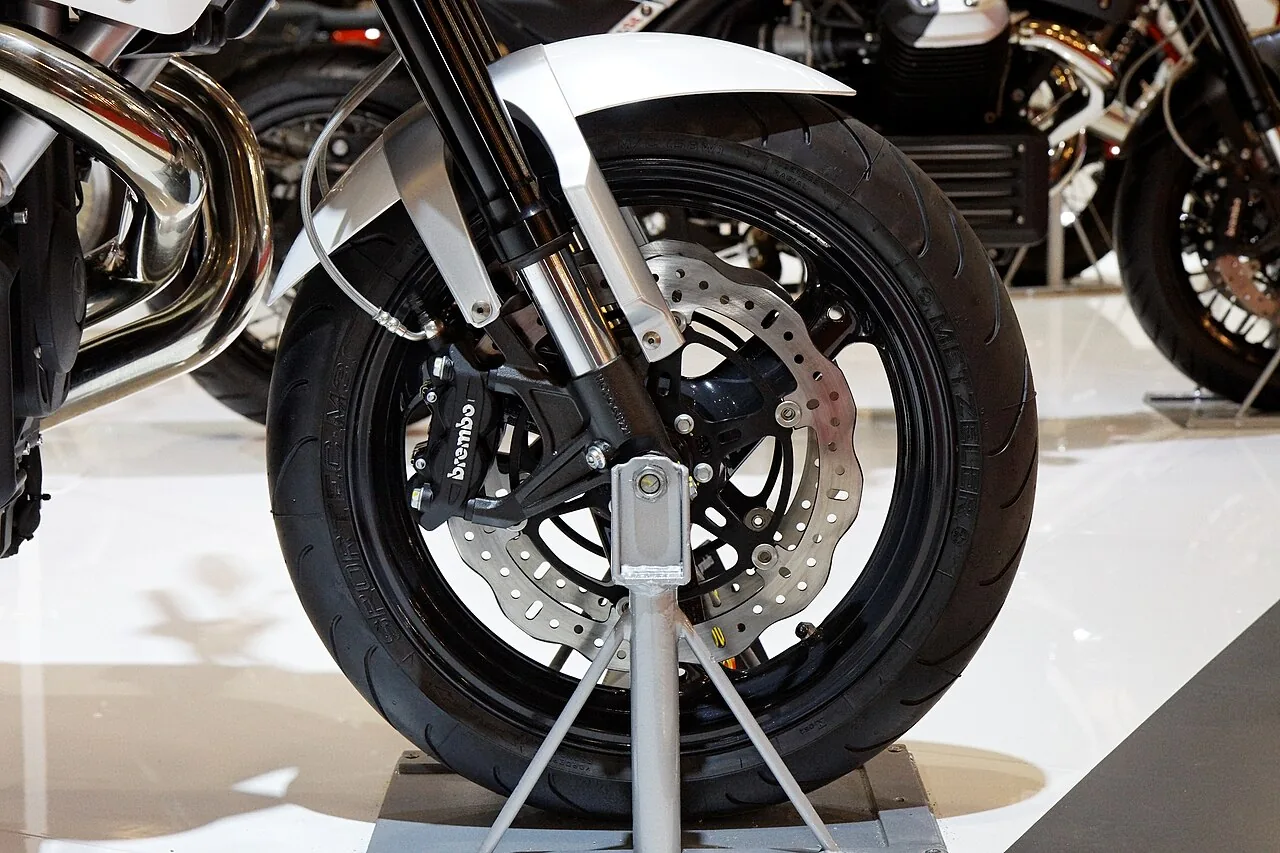
Photo: Thesupermat · Source · CC BY-SA 3.0
A flat tire on a motorcycle creates a transport decision that should account for the bike's condition and location. Do not ride it merely to move closer to a convenient pickup point. Explain the problem and let the operator assess what is needed.
Describe the motorcycle
Give the make, model, and approximate size or known weight information. Mention touring luggage, aftermarket accessories, a sidecar, or any other feature that changes the configuration. Tell dispatch which tire is affected and whether there is visible wheel or other damage.
Explain how the bike is positioned
A motorcycle on its stand in an open lot is different from one on an incline, beside traffic, or unable to remain upright normally. Describe those conditions and keep bystanders away from the work area. Do not attempt to help with loading or securement unless the operator has explicitly coordinated it with you.
Confirm the repair destination
Contact a motorcycle-capable shop and explain the tire issue before choosing the drop-off location. Ask whether it can receive the motorcycle, whether an appointment is needed, and how an after-hours delivery would work. Do not assume an automotive tire shop accepts motorcycle work.
Plan your own ride
The bike's transport and the rider's transport are separate arrangements. Ask about available passenger arrangements and organize a suitable alternative when needed. Keep your helmet, phone, medication, and other essentials with you if safe to retrieve.
For a request in Somerville, New Jersey, Chain Gang should receive the motorcycle details, pickup conditions, and confirmed destination together. That provides a clearer basis for planning than simply requesting a truck for a flat tire without identifying the vehicle or its access needs.