 Skip to content
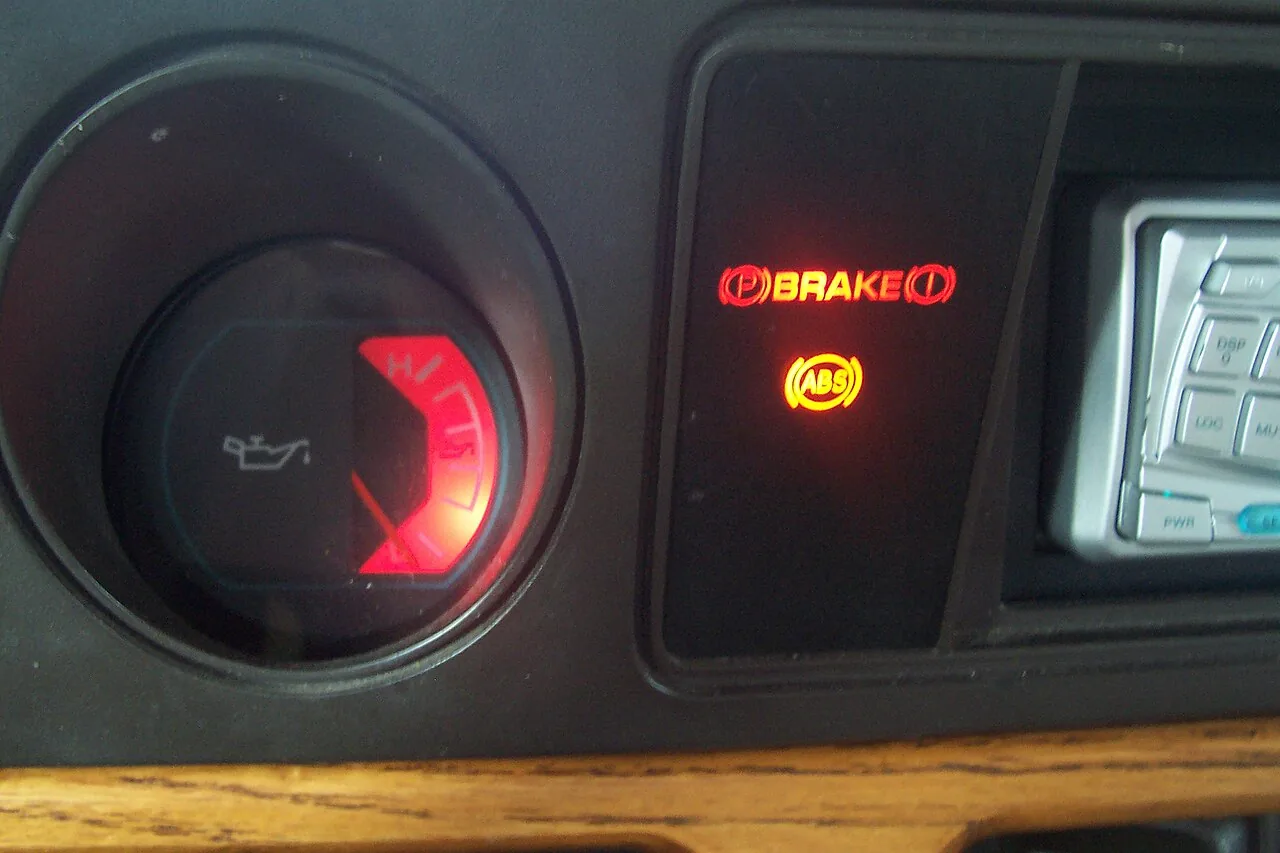
Photo: Ahanix1989 at English Wikipedia · Source · Public domain
An oil-pressure warning should not be treated as an ordinary reminder to schedule an oil change. Follow the instructions for the exact vehicle and prioritize a safe stop. Do not keep the engine running just to gather more information for a towing call.
Follow the warning instructions
For example, the Ford guidance linked here instructs the driver to stop safely and turn off the engine when a low-engine-oil-pressure message appears. Your own vehicle's manual is the appropriate reference for its warning and response. Ford warning-message guidance.
Record what happened
Once safe, note the exact message, whether it appeared while driving, and whether there was an unusual noise, smell, or visible leak. Share those observations with the repair shop. Do not add a diagnosis such as “bad sensor” unless a qualified person has actually established it.
Do not crawl underneath the vehicle or touch hot components to investigate. Adding oil or clearing a warning does not by itself establish that an oil-pressure problem has been resolved.
Arrange the transport details
Tell dispatch whether the engine is off, where the car is positioned, and whether there are other access or movement concerns. Confirm the repair destination and advise the shop of the warning before delivery.
For a towing request in Hillsborough, New Jersey, Chain Gang needs an accurate description of the stopped vehicle and its surroundings. The towing plan can address getting it to a facility; the cause of the oil-pressure warning requires a separate mechanical assessment.