 Skip to content
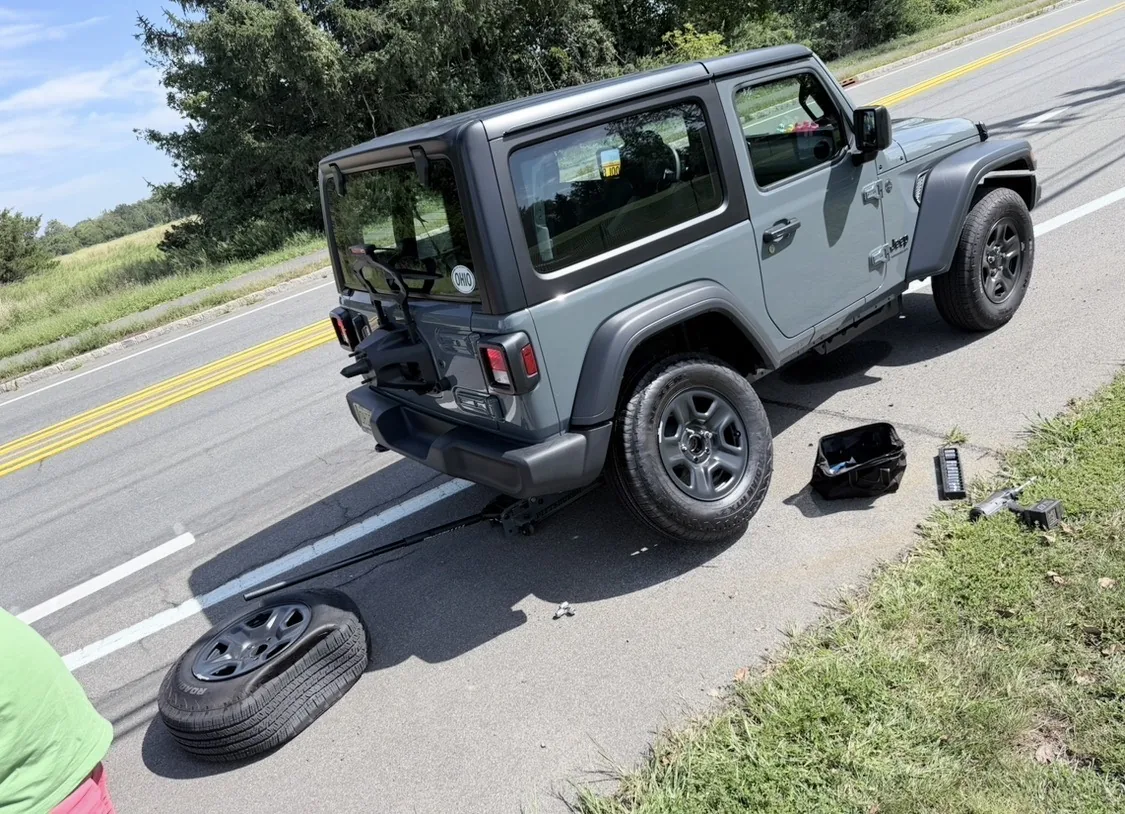
A tire-pressure warning deserves attention, but the dashboard light alone does not tell you the condition of every tire. The first step is to reach a safe place and consult the vehicle's instructions. Do not continue a trip on the assumption that a warning is harmless because the car still feels normal.
Separate a warning from visible damage
If you can inspect the vehicle safely, note whether a tire looks low, damaged, or completely flat. Do not stand beside passing traffic to investigate. Tell roadside assistance whether the warning appeared suddenly, whether the vehicle's handling changed, and which tire appears affected.
Use the vehicle's pressure information
NHTSA directs drivers to the vehicle placard or owner's manual for the recommended pressure. The number molded on a tire's sidewall is not the vehicle's recommended inflation setting. A pressure-monitoring system also does not replace routine pressure checks. NHTSA tire information.
Avoid presenting an unverified pressure estimate as a measurement. If a tire has visible damage, adding air should not be treated as proof that it is fit to drive.
Prepare the roadside request
Tell dispatch whether you have a spare and whether it appears usable. Include the vehicle's year, make, model, location, and any damage you can describe. If you need a repair destination, confirm a tire shop that can receive the vehicle rather than assuming the nearest listing is open.
For drivers in Warren, New Jersey, contacting Chain Gang, the useful question is what assistance fits the observed situation. A warning light, a puncture, and a damaged wheel can lead to different service decisions. Describe the evidence and let the vehicle instructions and professional assessment guide the next step.