 Skip to content
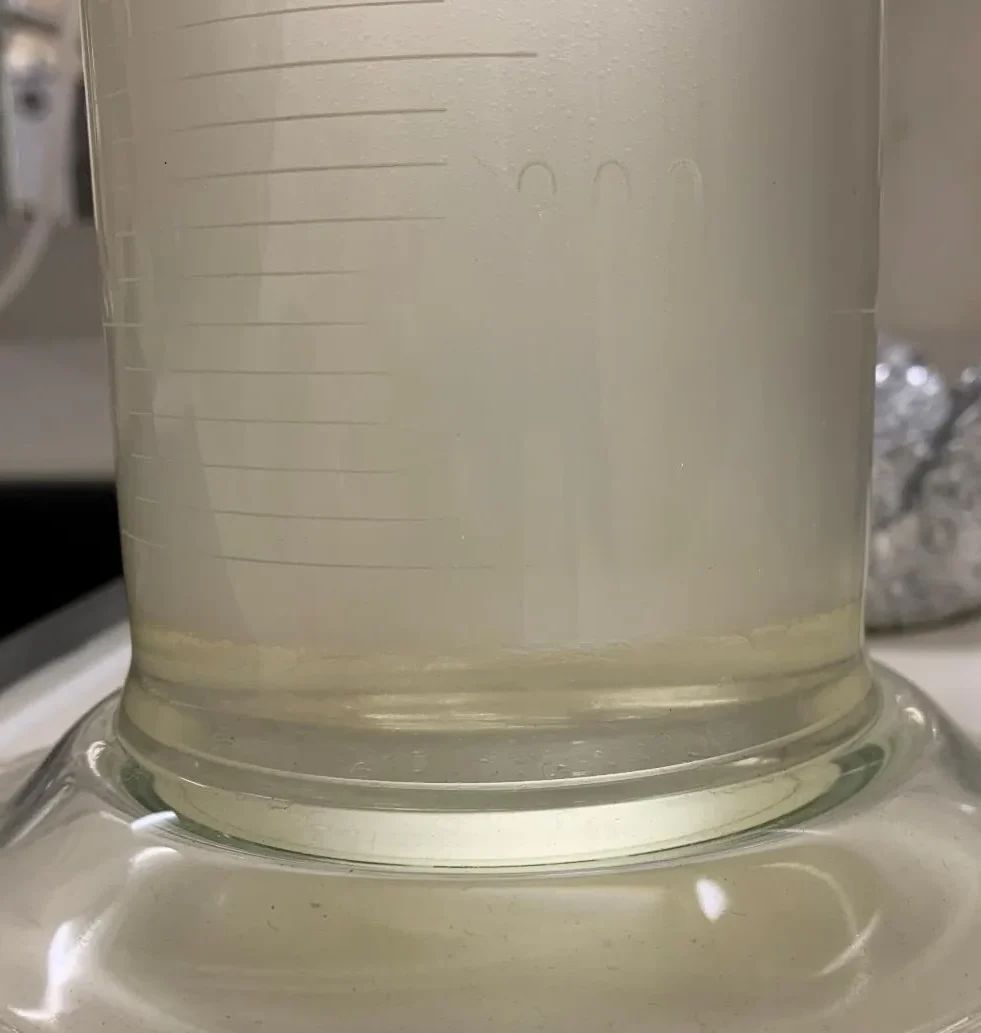
Photo: California Department of Food and Agriculture, Division of Measurement Standards · Source · State public-domain use policy
If you think the wrong fuel or water-contaminated fuel went into your vehicle, explain that concern when you call for help. This is different from simply running out of gas. Tell the repair shop what happened, and arrange transport if the vehicle should not be driven.
A real example of contaminated fuel
The photograph above comes from the California Department of Food and Agriculture's fuel-quality guide. It shows a hazy gasoline sample above a separate water layer. It is an educational example, not fuel taken from a Chain Gang customer's vehicle. The guide explains that fuel containing water, sediment, or haze is unsuitable for use as motor fuel. See the original fuel-contamination guide.
A photo cannot diagnose what is inside your own tank. Leave fuel sampling, draining, and testing to a qualified professional. Do not try to dilute the problem by adding more fuel or an additive on your own.
Avoid circulating suspected wrong fuel
If you realize a misfueling mistake before starting, leave the ignition off and get professional advice. If the vehicle is already running, stop in a safe place and switch off the engine; do not repeatedly restart it to see whether the problem has cleared. The AA's misfueling guidance explains why starting the engine can circulate the wrong fuel and increase damage.
If you notice leaking fuel, smoke, fire, or an immediate road hazard, move away from the danger and contact emergency services.
Keep the details that help the repair shop
Save the fuel receipt and note the station, pump, fuel selected, approximate amount, and time. Explain whether the engine was started and what happened afterward. Describe observations without assuming that the station or a particular fuel caused the failure. A repair shop can investigate the cause.
Call the receiving facility before arranging the tow. Ask whether it can assess the suspected fuel issue, and confirm its address, hours, and delivery instructions. If the vehicle is still at a pump, tell station staff and coordinate a safe approach for the towing operator.
Give dispatch the same information
Tell Chain Gang the vehicle's year, make, model, exact location, and whether it can roll or steer. Make clear that you need help with a suspected fuel-related breakdown, rather than an ordinary fuel delivery. That lets the operator plan the transport and the shop prepare for the assessment.